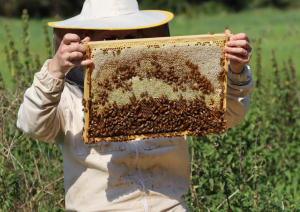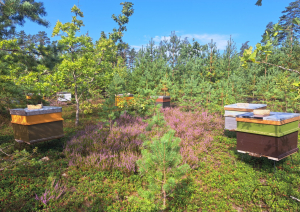



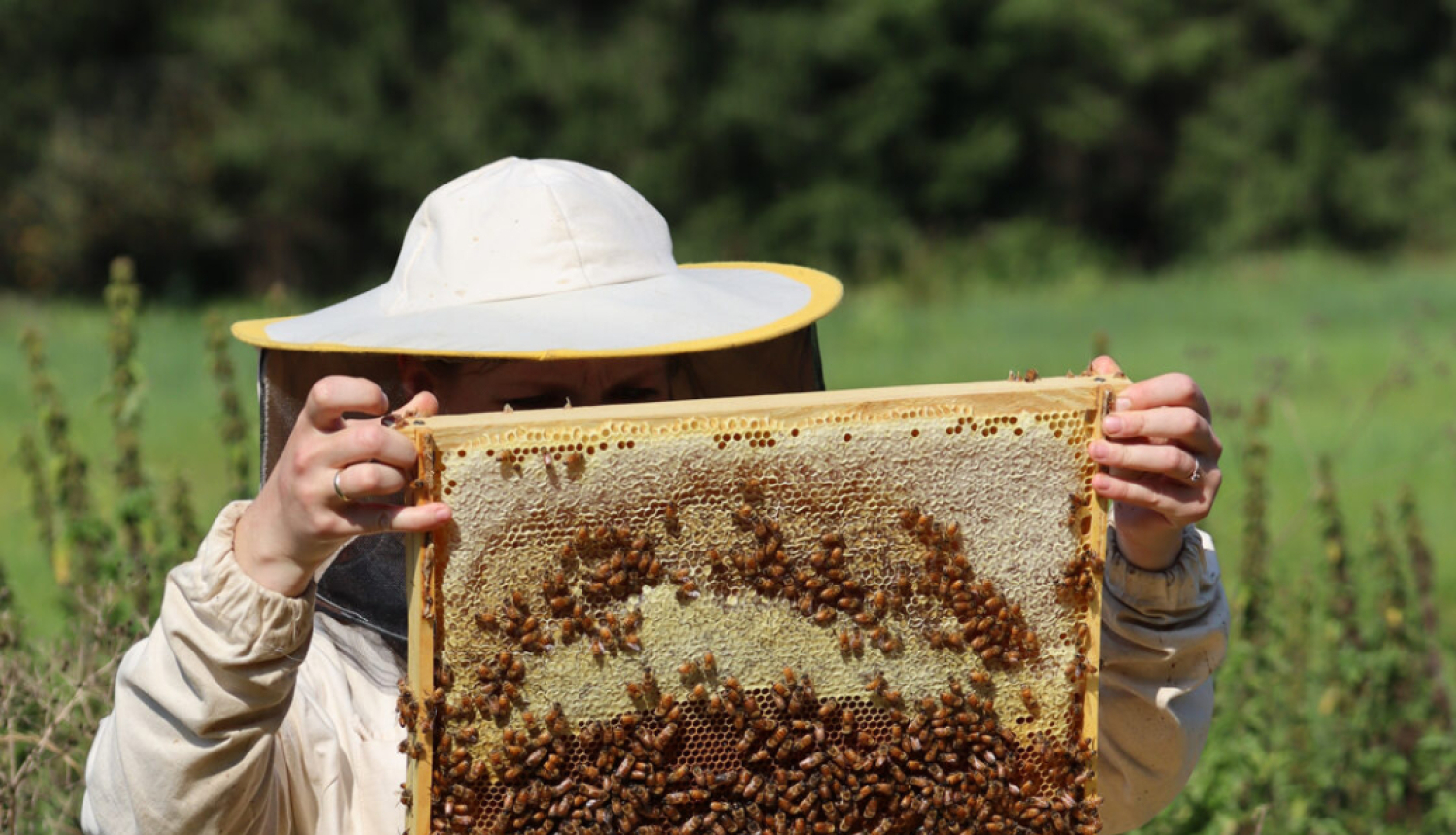
Agnese is a beekeeper in the Sigulda region of Inčukalns, currently caring for over 300 bee colonies. Thanks to support for small rural businesses, her company, SIA Smilga Spalviņa, has experienced a significant technological breakthrough and has become one of the few places in Latvia where beekeeping traditions meet high science.
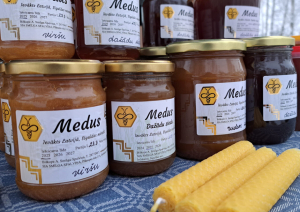
She has significantly increased the number of bee colonies, leading directly to higher volumes of honey, bee bread and queen bees sold. However, the farm's biggest innovation and source of pride is a unique service: the collection and storage of drone sperm using cryopreservation. This service aims to preserve unique genetic material in the long term, improving the efficiency of instrumental insemination and being essential for the overall improvement of breeding in Latvia. A modern laboratory has been set up on the farm for this purpose, equipped with a special laminar flow cabinet, various types of freezers, and other specific equipment. New Latvian standing hive elements have also been purchased to strengthen the colony base.
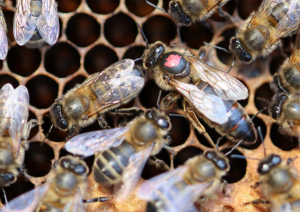
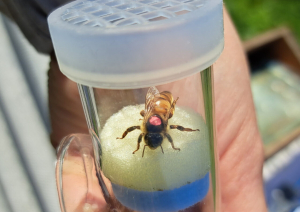
Of the approximately 15 beekeepers engaged in queen bee breeding in Latvia, only two offer instrumental insemination. Preserving good breeding material is essential for ensuring high productivity, disease resistance and winter hardiness in apiaries. As queen bee breeding and creating splits are the company's main activities, cryopreservation services are also offered to foreign breeders. This allows them to renew the best lines even when the breeding queens have reached the end of their working life. Queen bees bred by Agnese have already travelled to 12 other European countries.
Agnese's interest in the industry extends beyond practical apiary work; she is also actively involved in scientific research and is the author of several publications offering new insights for beekeepers. By combining academic knowledge with tireless work, she continues to promote Latvia's reputation around the world, demonstrating that our beekeepers can offer the highest level of service and make valuable scientific contributions on a global scale.